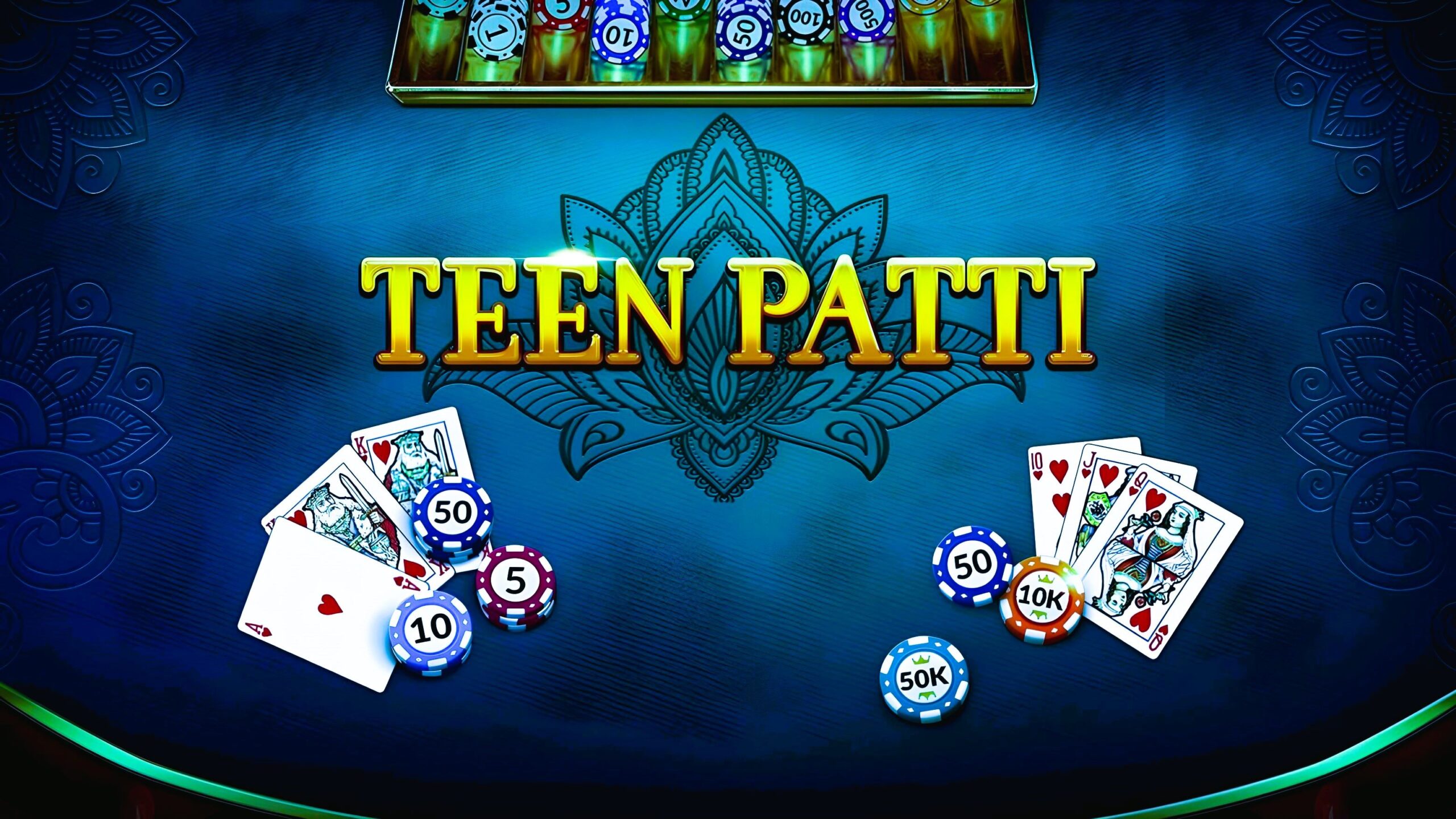
Teenpatti, also known as Indian Poker, is one of the most popular card games in India. Its name literally means “three cards,” which is exactly how the game is played. This thrilling gambling game combines luck, strategy, and psychology, making it a favorite in Indian households, especially during festivals like Diwali.
History of Teenpatti in India
Teenpatti is believed to have its roots in the British card game “Three Card Brag,” which was introduced in India during colonial times. When the British arrived, they brought with them many Western games, and Three Card Brag quickly caught the attention of Indian players due to its simple rules yet strategic gameplay. Over the years, the game was adapted to suit local tastes and culture, evolving into Teenpatti as it is known today. The Indian version emphasizes social interaction, psychological play, and the thrill of betting, making it far more than just a simple card game.
As Teenpatti spread across the country, it became a staple of Indian households, particularly in rural and urban social gatherings alike. Its accessibility—requiring only three cards and a standard deck—made it easy for families and friends to play during festive seasons or casual get-togethers. Many older generations recall playing Teenpatti during Diwali nights or weddings, where it served as a fun way to bond, share laughter, and even teach children the basics of strategy and probability in an entertaining setting. The game’s evolution reflects India’s ability to take foreign influences and seamlessly adapt them into a culturally rich experience.
Popularity and Cultural Significance
Teenpatti is more than just a card game; it is a cultural phenomenon in India. It has become synonymous with celebration, family gatherings, and social fun. During festivals like Diwali, it is common to see families gathering around a table, betting small amounts, and enjoying the thrill of the game together. The game is often associated with luck, skill, and friendly competition, creating an environment where players can challenge one another while still strengthening social bonds. Its popularity is not limited to any particular age group, making it a unifying activity for multiple generations.
The cultural significance of Teenpatti also extends to its reflection in popular media, movies, and digital platforms. In many Indian films, scenes of Teenpatti capture both the excitement of gambling and the social drama that accompanies it. Online platforms have further increased its reach, allowing players across India to enjoy the game virtually while preserving its traditional charm. Teenpatti has thus transcended mere entertainment to become an integral part of Indian leisure culture, blending competition, strategy, and social interaction in a way few other games can. Its deep-rooted presence at celebrations and its ability to connect people highlight its enduring cultural importance.
Basics of Teenpatti
Number of Players
Teenpatti is most enjoyable when played with 3 to 6 players. This range allows enough competition and strategy without making the game overly long or complicated. Having fewer than three players can reduce the excitement, as the dynamics of betting and bluffing are minimal. On the other hand, more than six players can slow down the game and make it difficult to track bets and strategies.
In India, Teenpatti is often played at social gatherings, family events, or festivals like Diwali, where a group of 4–6 people is typical. Having the right number of players ensures everyone gets a fair chance to participate and keeps the energy lively. Key points to remember:
- 3–6 players is ideal for a balanced game.
- More players increase social interaction but can slow the game.
- Fewer players may reduce strategic play.
Cards Used
Teenpatti uses a standard 52-card deck, excluding jokers in most traditional versions. Each player receives three cards dealt face down. The absence of jokers in classic Teenpatti makes the game purely about luck, probability, and strategic betting. Some modern variations do include jokers, which act as wild cards and increase unpredictability.
The cards are ranked in a standard order, with Ace being the highest, followed by King, Queen, Jack, and so on. Suits are also used to determine hand strength in certain scenarios, especially for sequences and flushes. Key details about the deck:
- Standard 52-card deck (no jokers in traditional Teenpatti).
- Three cards are dealt to each player face down.
- Jokers may be included in some variants as wild cards.
- Card ranking: Ace > King > Queen > Jack > 10…2.
Objective of the Game
The objective of Teenpatti is simple yet exciting: to hold the best three-card hand and win the pot. Players bet according to the strength of their hands and try to outsmart opponents through bluffing and careful betting. The player with the strongest hand or the last player remaining after others fold takes the entire pot.
Winning in Teenpatti is a combination of luck, skill, and psychological play. It’s not just about the cards you hold but how you play them. Players must constantly evaluate whether to bet, raise, or fold based on their hand, the bets on the table, and the behavior of their opponents. Main goals include:
- Have the strongest three-card hand at the table.
- Use betting and bluffing to force opponents to fold.
- Win the pot through strategic play or by holding the best hand.
Teenpatti Rules
The Deal
The game of Teenpatti begins with the dealer distributing three cards to each player, all face down. This initial step is crucial as it sets the stage for both luck and strategy. Traditionally, the player sitting to the dealer’s left starts the game, and the play proceeds clockwise. Before betting begins, each participant contributes an ante, known as the “boot amount,” to the pot. This ensures that the pot has value from the very start, increasing the stakes and excitement.
This initial deal is more than just a formality—it also creates anticipation and suspense among players. As the cards are distributed, each participant must quickly consider whether to play blind (without seeing their cards) or check their hand first. The dynamics of the deal, combined with the strategic ante, make Teenpatti engaging and social. It also teaches players early lessons in probability, risk-taking, and bluffing, which are essential elements of the game.
Betting Rules
Betting in Teenpatti can be done in two ways: blind or seen. A blind bet occurs when a player places a wager without looking at their cards, adding an element of surprise and risk. A seen bet is when a player checks their cards first and then bets according to their hand’s strength. Betting rounds continue in a clockwise manner, with players having the option to fold, call, or raise, until only one player remains or all players agree to reveal their hands.
These betting rounds are where Teenpatti truly becomes a test of skill and strategy. Players must observe opponents’ behaviors, calculate odds, and decide whether to bluff or play honestly. The betting process also amplifies tension and excitement, making each decision critical. Some seasoned players even use subtle psychological cues—like the size of a bet or the speed of action—to mislead their opponents, which adds another layer of depth to the game.
Show or Pack Options
In Teenpatti, a player has two primary choices during betting: “show” or “pack.” Requesting a show means asking an opponent to reveal cards, which usually occurs when the pot reaches a high value and players want to settle the winner based on hand rankings. Choosing to pack means folding your hand, signaling that you believe your cards are weaker than your opponents’. Both options require careful judgment and experience.
The decision to show or pack is critical because it directly influences your chances of winning the pot. Experienced players often use bluffing to manipulate opponents into packing, even when their hand is not particularly strong. Conversely, a player might request a show to assert confidence or challenge a perceived weak hand. Understanding when to show or pack is a skill developed over time and adds a dynamic, interactive element to Teenpatti, making it more than just a game of luck.
Ranking of Hands in Teenpatti
Hand rankings in Teenpatti are essential for determining the winner. To make it easier to understand, here’s a table summarizing the main hands:
| Hand Name | Description | Ranking |
| Trail (Three of a Kind) | Three cards of the same rank | Highest |
| Pure Sequence (Straight Flush) | Three consecutive cards of the same suit | Second |
| Sequence (Straight) | Three consecutive cards of different suits | Third |
| Color (Flush) | Three cards of the same suit | Fourth |
| Pair | Two cards of the same rank | Fifth |
| High Card | Any hand that does not fit above categories | Lowest |
Trail (Three of a Kind)
The highest possible hand in Teenpatti is a trail, where all three cards are identical in rank. For example, having three aces is unbeatable and extremely rare, making this hand the ultimate goal for any player. Securing a trail often means an automatic win unless another player also has a trail of higher rank.
Trails are rare in Teenpatti because the probability of getting three identical cards in a three-card hand is low. This rarity is what makes achieving a trail so exciting, especially in Indian social settings where a high-stake trail can create intense suspense and celebration. Players often place large bets when confident of a trail, adding drama to the game and enhancing the social experience during festivals or family gatherings.
Pure Sequence (Straight Flush)
A pure sequence, also known as a straight flush, consists of three consecutive cards of the same suit. For example, 4-5-6 of hearts forms a pure sequence. This hand ranks just below a trail but is still very powerful and difficult to beat.
Pure sequences require both luck and strategic play because the probability of getting three consecutive suited cards is lower than most other hands. When players hold a pure sequence, they often use aggressive betting to intimidate opponents into folding. The visual appeal of a pure sequence also adds to the excitement of the game, making it one of the most celebrated hands during a match.
Sequence (Straight)
A sequence, or straight, is formed when a player has three consecutive cards of different suits. For example, 7♠ 8♥ 9♦ creates a sequence. This hand is weaker than a pure sequence but stronger than a flush or pair.
Playing with a sequence requires careful attention to betting and bluffing. Because a sequence is not as rare as a trail or pure sequence, players must often rely on strategy rather than luck alone. This makes sequences particularly interesting in Teenpatti, as they encourage interaction and psychological gameplay, keeping the game engaging for all participants.